
About Hand Embroidery Stitches
Stitching or sewing has a history dating back to prehistoric times. It is believed, with archaeological pieces of evidence, that sewing must have come into being since the stone ages when people had begun to sew to attach pieces of animal skin using needles made of bones, antlers, and ivory. They probably must have used threads made of animal parts like veins, or plants.
As the times progressed and sewing started to become an integral part of life, not only newer methods of sewing styles developed but many other materials were tried as needles and threads. For many thousands of years, sewing or stitching was done exclusively by hands. Later, machines that helped to assist sewing and weaving were developed. The invention of sewing machines in the 19th century and computerization in the 20th century led to a revolution in the textile industry with the mass production of sewn objects.
Although sewing or stitching is commonly associated with clothing and fabrics, it must not be forgotten that this skill is used in many other craft areas like making shoes, bags, sporting goods, and all those things associated with attaching pieces of fabric. Sewing also comprises a wider range of art in the textile industry like embroidery, tapestry, quilting, applique, weaving, etc… Our tutorials deal with one of such arts: Hand Embroidery, which is very much practiced even today in spite of all the invasion of machine-made, ‘perfect’ sewn objects. It should be admitted, though, that it is a dying art with hobbyists finding lesser time and patience. On the other hand, hand embroidery is an important means of livelihood for many people in different countries. There are more than 400 types of different stitches from around the globe and even more types of hand embroideries. The stitches and associated hand embroideries can speak volumes of the history of its people, culture, and times.
This section of the tutorial will teach you the various hand embroidery stitches. These stitches are categorized based on certain families they belong to. These families are distinguished based on the nature of the technique used to create a particular stitch. It is possible that some stitches belong to more than one family, but an effort has been made to minimize the confusion. Hand stitching is an art to be perfected with patience and perseverance. It helps us in creative expression and ultimately gives us the satisfaction that most other hobbies can give. Happy learning…happy stitching. 🙂
You can go directly to the pages of each family from here:
Stitch Families
Running Stitch Family | ||
Stem Stitch Family |
Chain Stitch Family |
Chevron Stitch Family |
Knots Family |
Palestrina Family |
Satin Stitch Family |
Fishbone Family |
Fly Stitch Family |
Feather Stitch Family |
Blanket Stitch Family |
Cretan Stitch Family |
Cross Stitch Family |
Herringbone Family |
Couching Family |
Weaving Stitch Family |


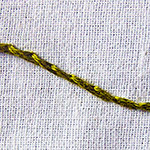

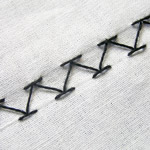
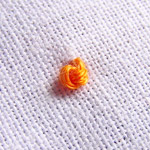
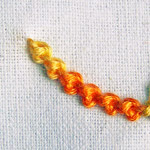
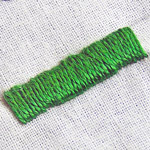


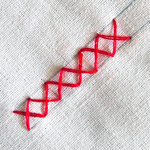
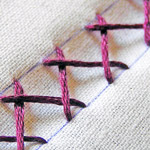
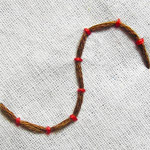

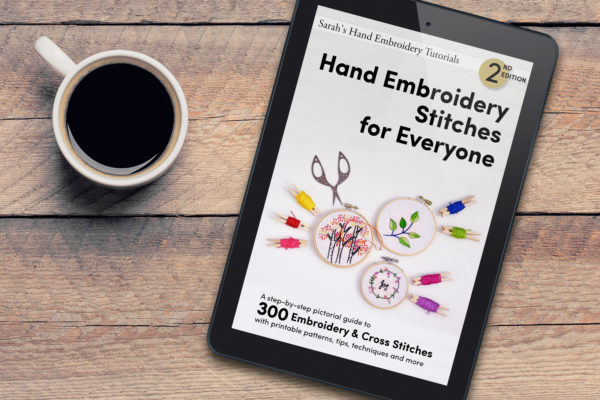
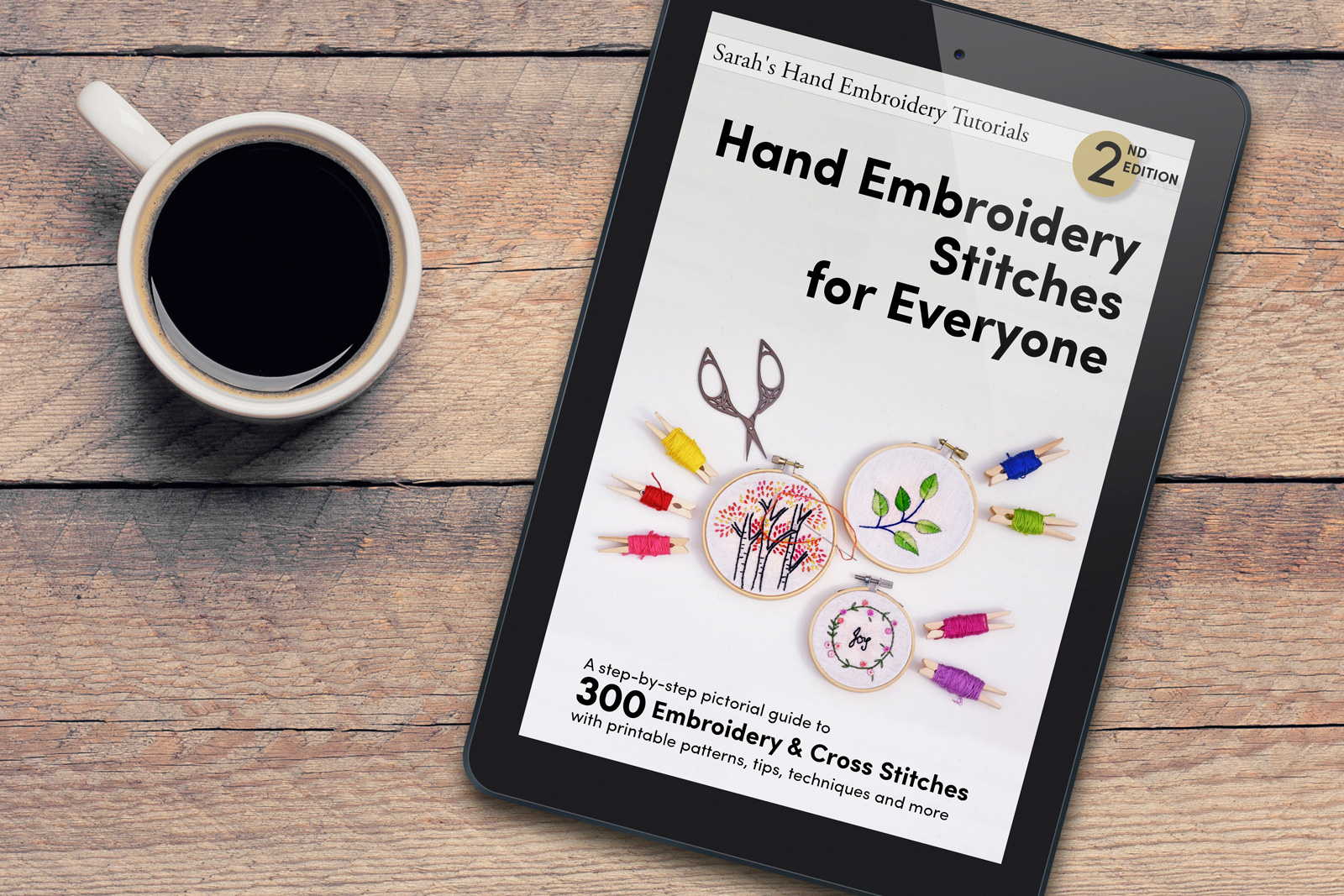
We have a dedicated Hand Embroidery Book with a picture dictionary and step-by-step guides to 300+ stitches. Buy now and start stitching!




For the past few weeks I’ve been devouring every single word and photo on this site, and I’ve loved it!

The tutorials are absolutely brilliant. Clear, concise and understandable to a complete novice like me. I especially enjoyed reading the histories and applications that introduce each one. It certainly has whet my appetite in learning to embroider.
This week I finally took the plunge and found myself having a go. I found an image of a geometric velociraptor on Google and printed it (in draft mode) onto Stick and Stitch and got started. It’s not brilliant, nor anywhere near perfect, but I learned an awful lot doing it! I learned that metallic threads are a bugger to work with, but oh so pretty!
Anyways, thank you for putting together such an incredible resource.
Cate xx
Dear Cate,
It is so lovely to read your comments. I love the geometric pattern you have stitched! Thank you for sharing it here. I am happy that you love our pages. Most of our learning comes when we experience stitching. So, keep making more hand embroidery pieces, sharing them here whenever possible, and learning.
Much love,
Sarah
I use this for my textiles class. super helpful 🙂
Happy to know that our page helped you. 🙂
I was fortunate enough to attend a group where the lady who ran the group was teaching us new stitches. Due to COVID she decided to stop as she cares for an elderly family member. I was so very disappointed until I stumbled on your blog. I love it and look forward to following your posts
Thank you, Valerie. I am happy that you like our website and I hope you enjoy learning from our pages.
I’m thinking of practicing on an older pair of jeans … that way, I have fancy jeans and fun learning new stitches.
I taught myself to embroider when I was a preteen – had to hide the events because my mom thought needlearts a waste of time and money.
Oh, that’s a cool idea! A stitch speckled jeans. ❤️
Yes, I get when you say that you had to hide your stitching practices. I’ve seen a lot of parents who think stitching gains you nothing in life. I had a young student who was punished by her parent for stitching instead of digging into science books. Good news…of late, I am seeing young parents being more open to this art and wanting their kids to try it out. 🙂
Your tutorial is the best!
I love it, thank you
Thank you, Tania. Enjoy stitching.
Sarah,
Thank you for creating the most helpful site for embroidery. I reference your page ALWAYS when crafting!
Hey Casey! I am almost a year late. Ask about how busy you can get. Thank you very much for your comment. It is always a pleasure to know that you are enjoying learning from our pages.
i just wanted to take a moment to thank you for this incredible database of stitch tutorials — wowza! i’m just starting to learn hand embroidery, literally 75 minutes ago i started my first sampler, and i already can see how much this site will help. amazing. thanks so much!

Cool site