 |
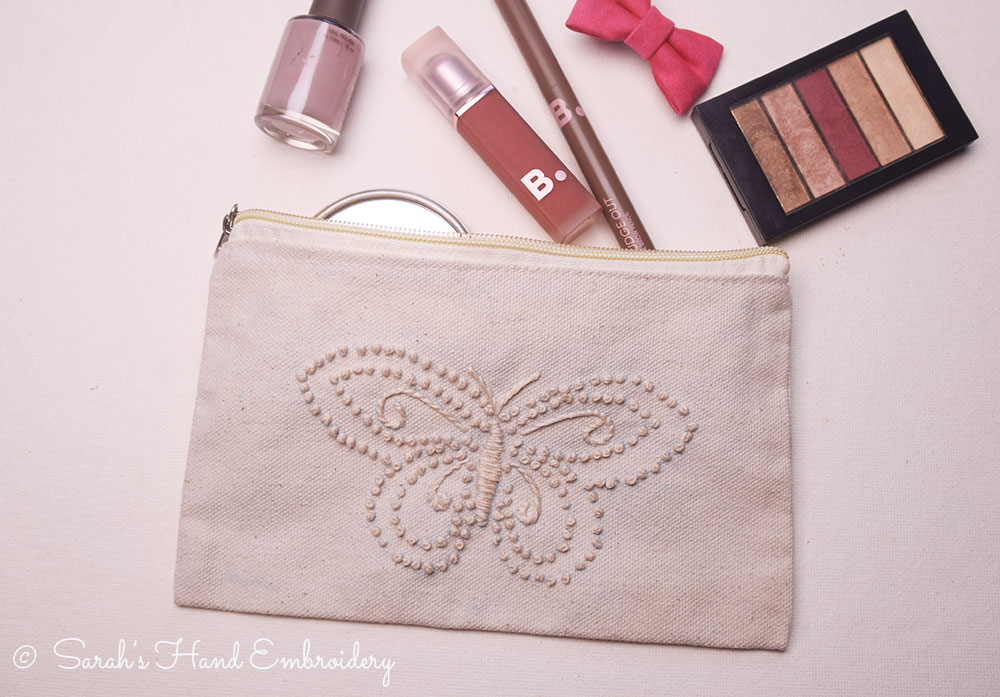
| Embroidery sample: Candlewicking on a Pouch |
About Candlewicking
Candlewicking is a form of whitework hand embroidery traditionally worked with thick cotton thread on unbleached cotton fabric. It mainly uses knots in a linear manner to create the outlines of the patterns. This gives the pattern a raised textured look. Ocassionally small spaces are filled with straight stitches too. It is one of the most beginner-friendly embroidery styles because it uses just a handful of stitches and focuses on simple, repetitive patterns. Candlewicking is great to use on table linens, cushions, quilts, baby clothes, wall hoops, and decorative household items.
History of Candlewicking
Candlewicking orginated in early colonial America, especially during the 18th and 19th centuries. Women used the thick cotton thread that came from candle wicks (explaining the name) to embroider on sturdy, unbleached muslin. Because materials were scarce, Candlewicking became a popular, affordable way to decorate household textiles. The style is similar to other whitework traditions from Europe but has its own identity due to the use of unbleached thread, muslin, and the signature Colonial Knot. There was a revival of Candlewicking in the late 20th century and is popular among hand embroidery artists who love heritage crafts, textured stitches, and monochrome designs. While traditional unbleached muslin and natural cotton thread are still popular, today’s artists experiment with colored threads, pastel fabrics, for hoop arts and wall hangings, and even with mixed media.
Stitches and Techniques Used in Candlewicking
Candlewicking is known for its raised texture and use of simple stitches that create dimension. Some of the main stitches include:
- Colonial Knot :The most iconic stitch in candlewicking. It is preferred over the French knot because it produces a rounder, sturdier knot.
- French Knot (sometimes used): Used when slightly smaller knots or denser filling is needed.
- Stem Stitch : Perfect for outlines, stems, and curves.
- Back Stitch: Commonly used for outlining motifs.
- Satin Stitch: Used to fill small areas like petals and leaves.
Materials for Candlewicking
 |
|
Popular & Traditional Motifs in Candlewicking
Candlewicking has a strong tradition of using nature-inspired and folk-style patterns. Some of the most popular motifs include:
- Floral Patterns : Daisy chains, Roses, Vines and leaves, Tulips and buds
- Colonial Style Motifs: Pineapples (a symbol of hospitality), Hearts, Vases, Bowls of fruit
- Geometric & Symmetrical Designs: Circles and borders, Starbursts, Repeating knot patterns
- Modern Candlewicking Motifs : Minimalist line art, Mandalas, Abstract textures, Simple border patterns for clothing
Candlewicking step-by step
Let me demonstrate a small pattern on a canvas pouch. You can use this pattern on any other fabric. My canvas pouch is not stark white but closer to the traditional unbleached cotton color.
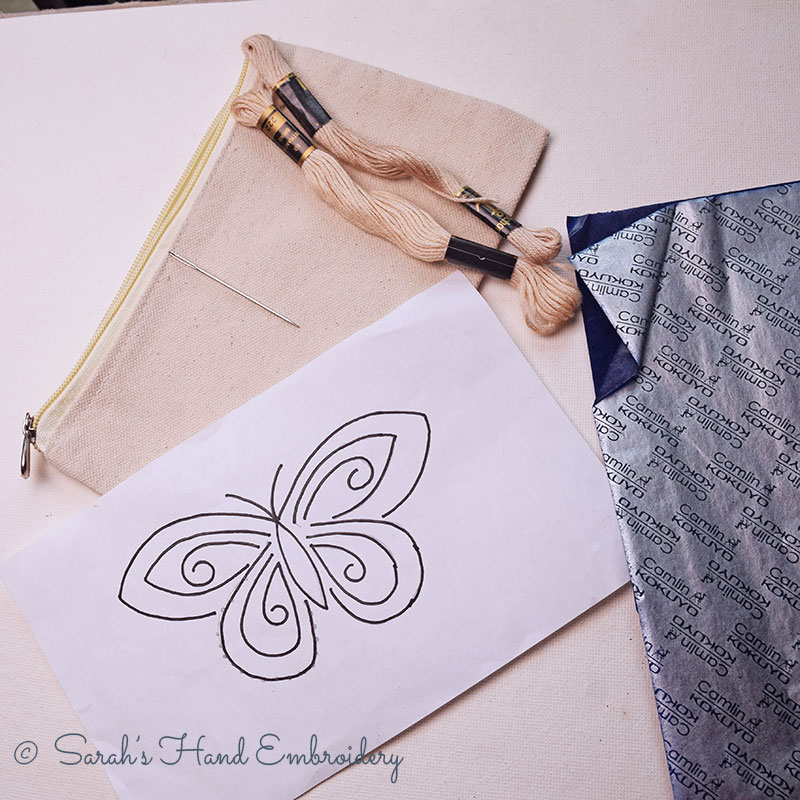
These are my supplies- The cotton canvas pouch, cotton embroidery floss (Anchor # )- a color that matches my pouch, needle size 3, carbon sheet, pencil and scissors. Watch the video for the entire process.
 |
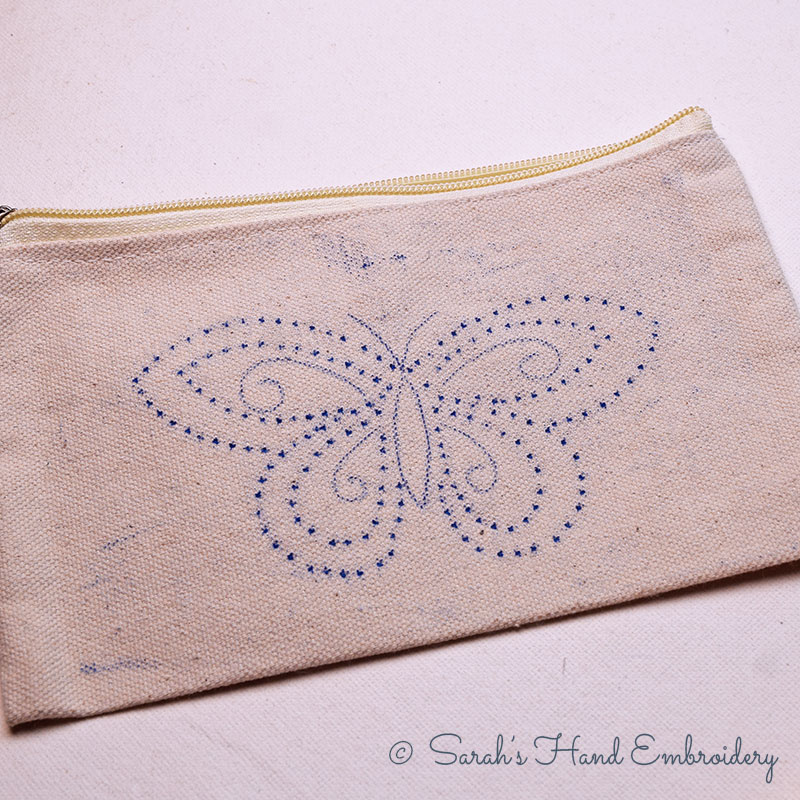 |
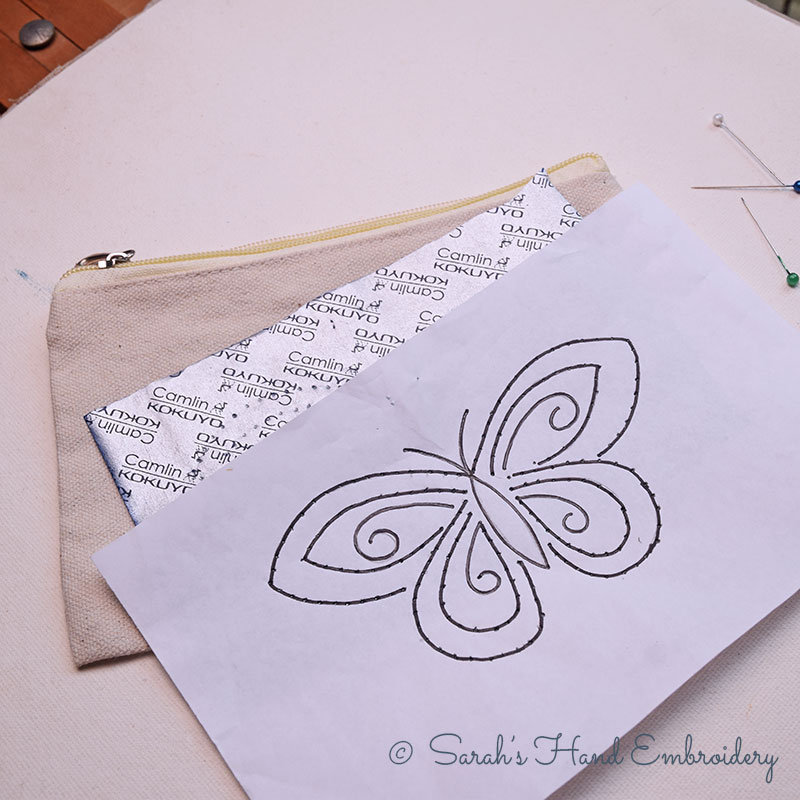
Trace the pattern using the carbon sheet. Note that certain lines are meant for the Stem Stitch and the Satin Stitch, so it is done in solid lines. The ones that will use Colonial Knots are traced in dots placed at ~ 1/2 cm distance.
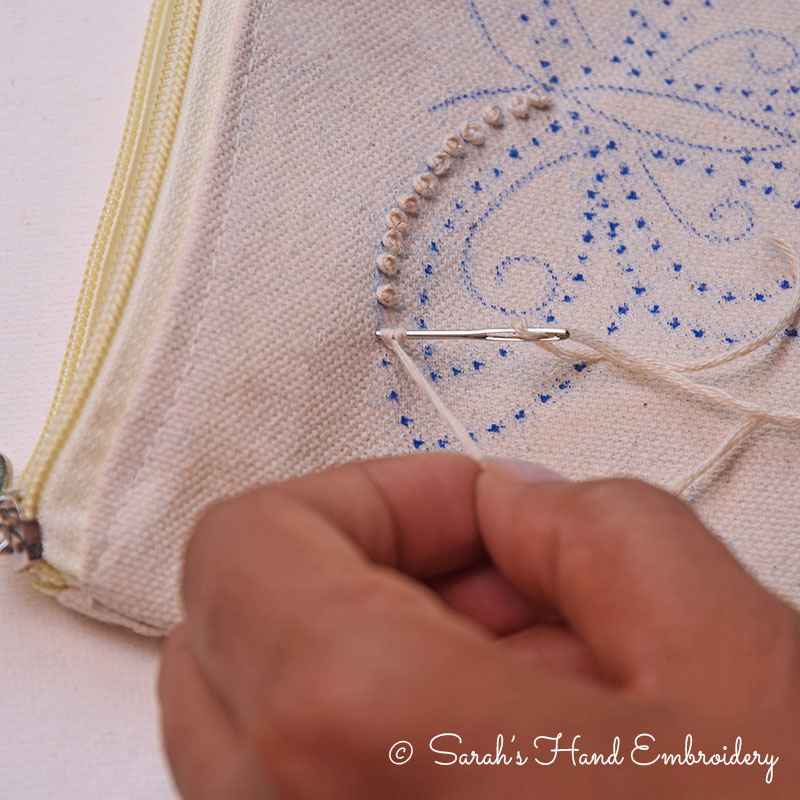 |
Colonial Knots: Start by working the Colonial Knots on each dot. So make sure that the dots are sensibly spaced. Always hav a dot at sharp corners- it keeps the corners crisp. If you are not comfortable with the Colonial Knots, you may use the French Knots as an alternate. |
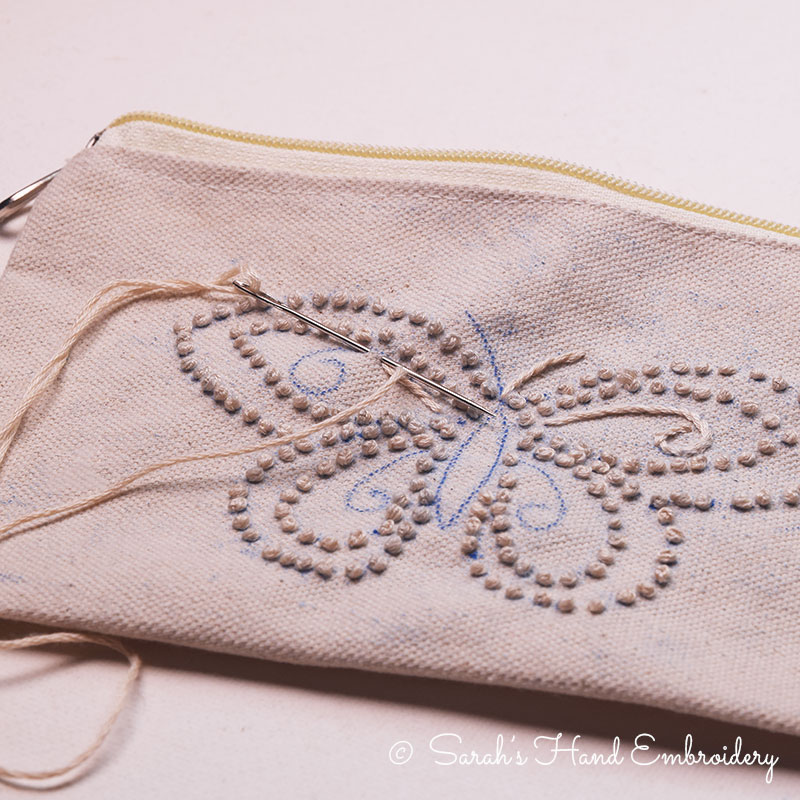 |
Stem Stitch: Work the Stem Stitch in the curly lines inside the wings and the antennae. This stitch is used to break the monotony of the Colonial Knots in such patterns and give it a cleaner structure. The Outline Stitch can be a good alternative and I use it sometimes. |
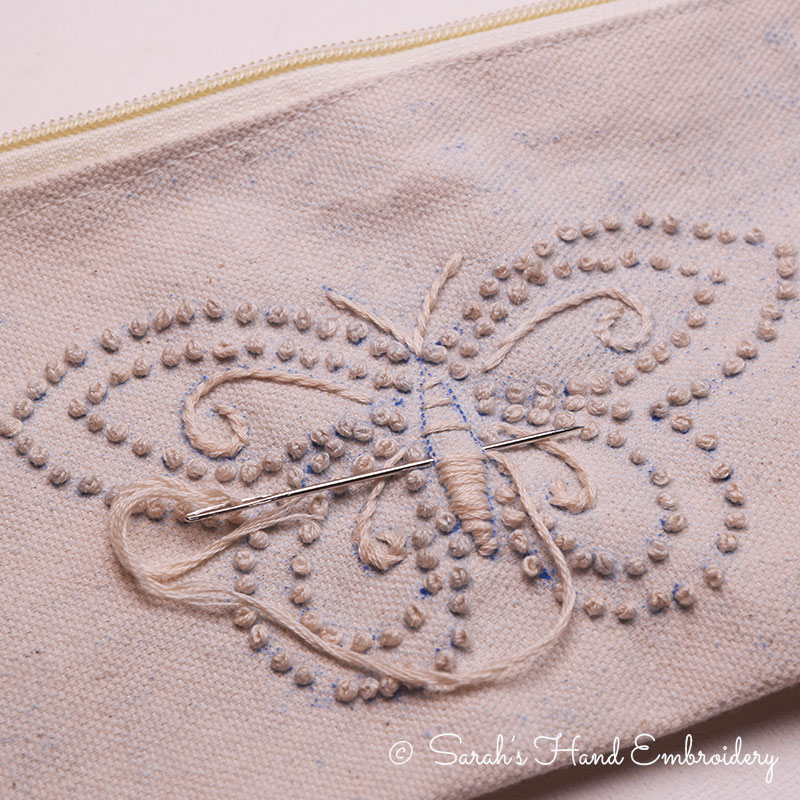 |
Satin Stitch: Work the Satin Stitch on the body. Not all patterns will need the Satin Stitch. This one uses it to balance out the other stitches by creating a filled space. |
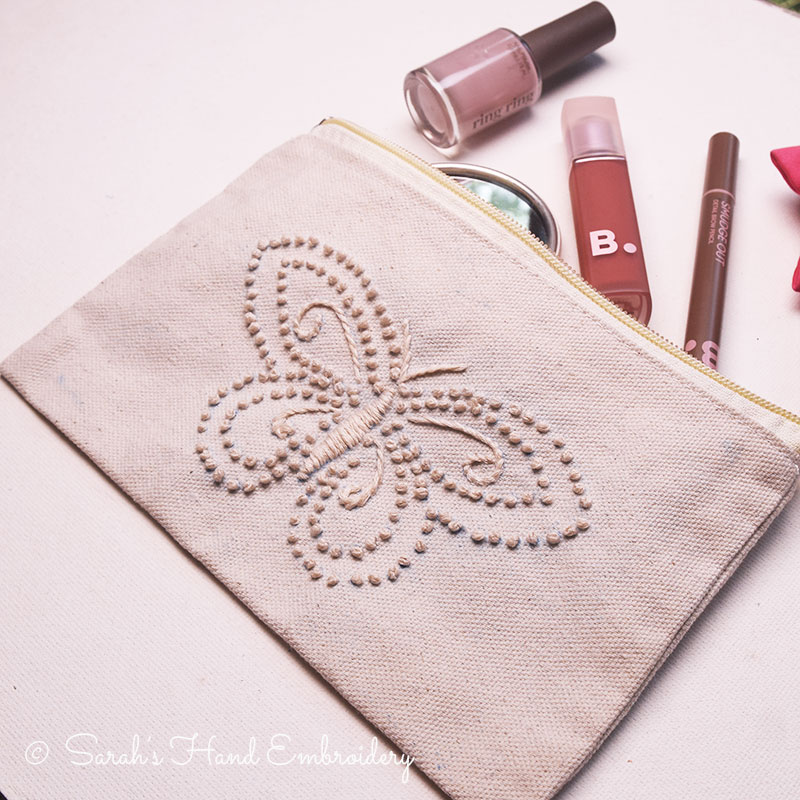 |
Our butterfly pattern is done. You can see the raised texture so rich. Let me know what you think abou this embroidery! |
 Sarah has been researching and sharing hand embroidery lessons for over 20 years, making it accessible to everyone around the globe.