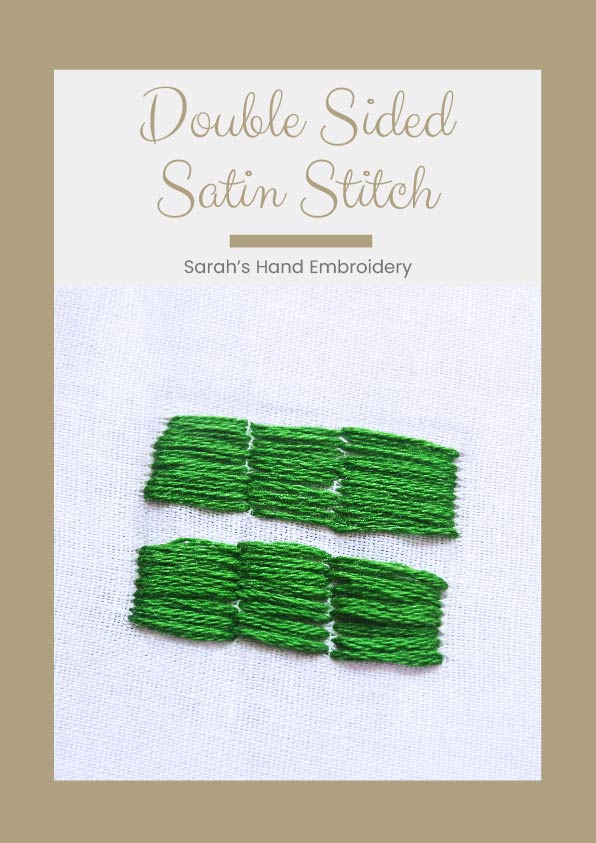
How to do the Double Satin Stitch
The Double-Sided Satin Stitch can resemble the Encroaching Satin Stitch. The difference is in the technique. This stitch ideally follows the Holbein Stitch technique, where the pattern is filled vertically instead of portion by portion. In the process, this stitch can end up looking like the Long and Short Stitch too. The Double-Sided Satin Stitch can give the exact same look on either side of the fabric. This is the main stitch to be used in an embroidery called the Chamba Rumal from India’s mountain states, where the patterns are two-sided and worked in silk. This stitch technique is said to have originated in China and probably made its way into Northern India.
 |
 |
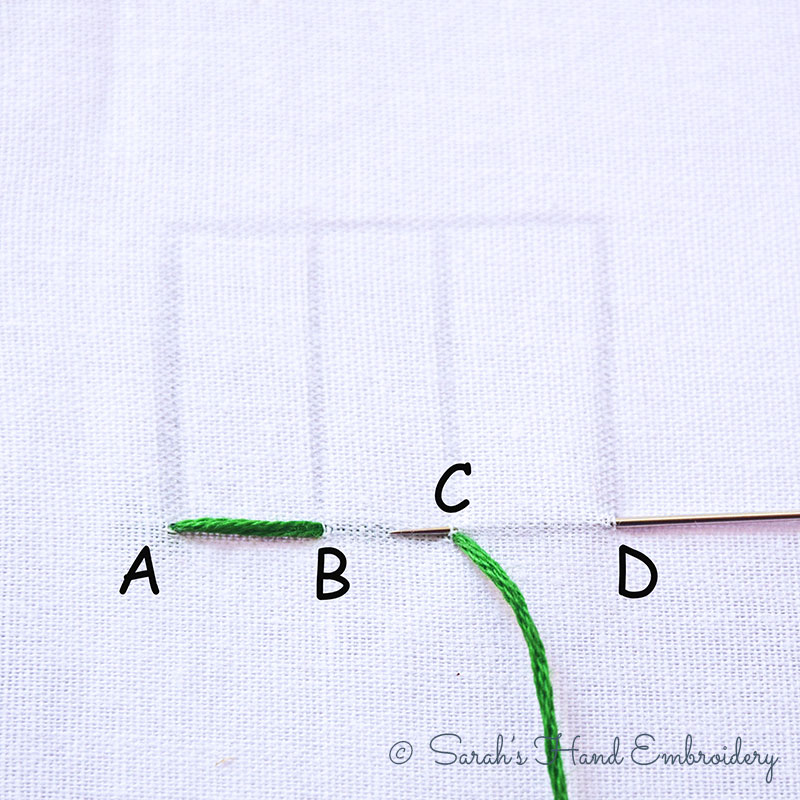
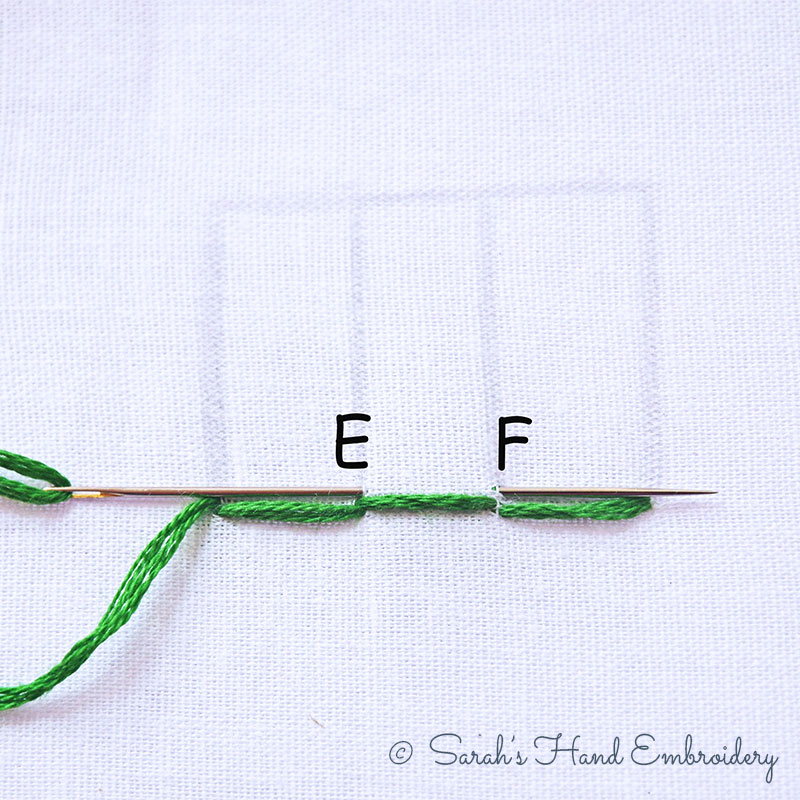
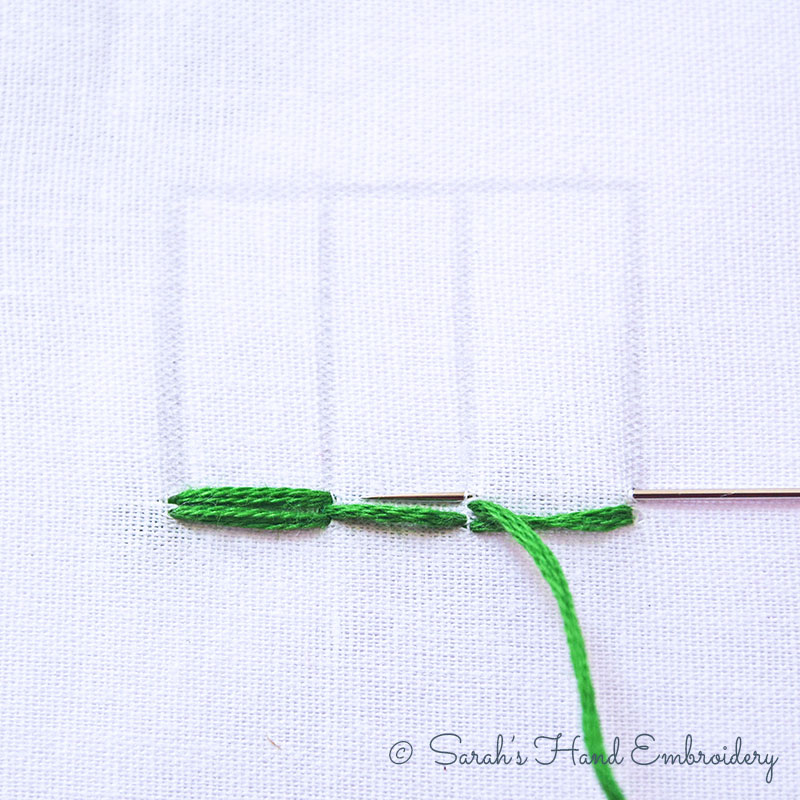
| Fig 1: Start by dividing the pattern into different portions. Then, start stitching fromone end to the other using long Running Stitches. . |
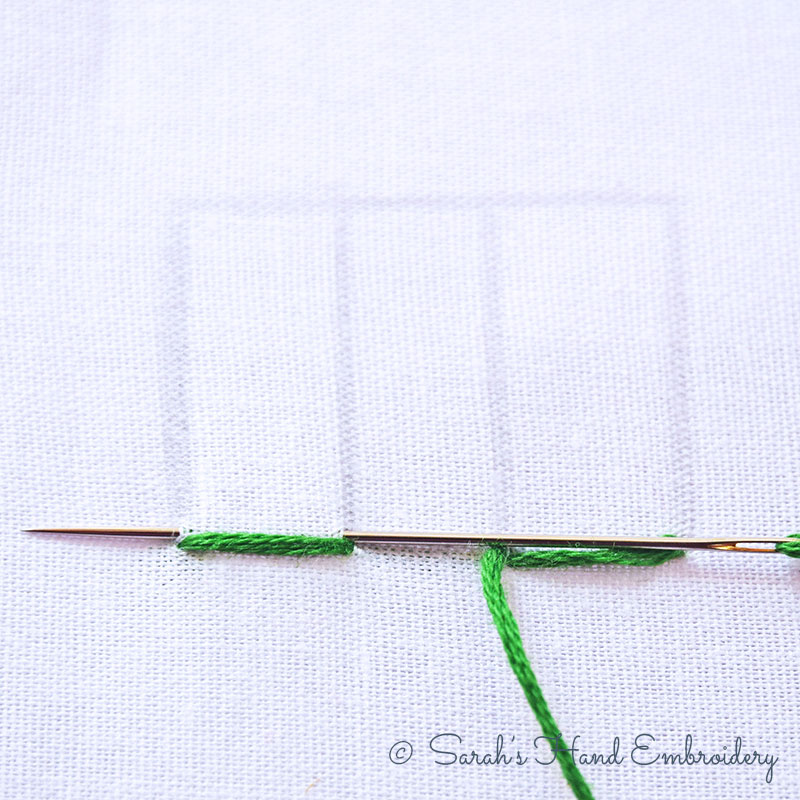
Fig 2: Next, turn around and make a return journey, filling in the gaps made earlier. The needle can be placed right through the same stitch points or slightly to the side. |
 |
 |
| Fig 3: Make another row from one end to the other. A pattern can have no portion or multiple portions. It depends on how big the pattern is. |
Fig 4: Do a return journey and fill in the gaps made on the onward one. |
 |
 |
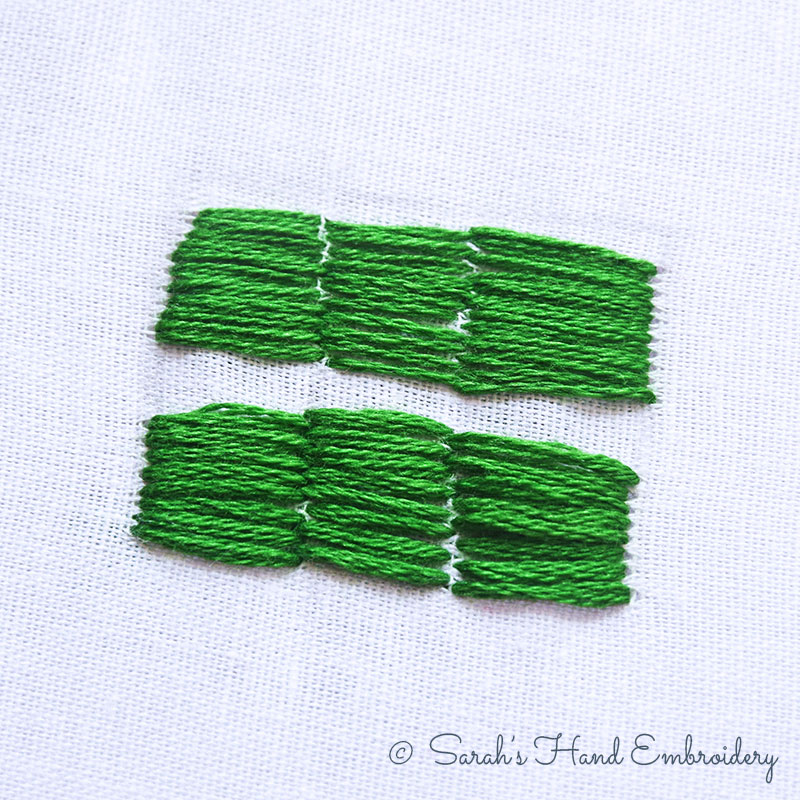
| Fig 5: A finished portion looks like this. The one on the top is made with 3 strands and the one below with 6 strands. |
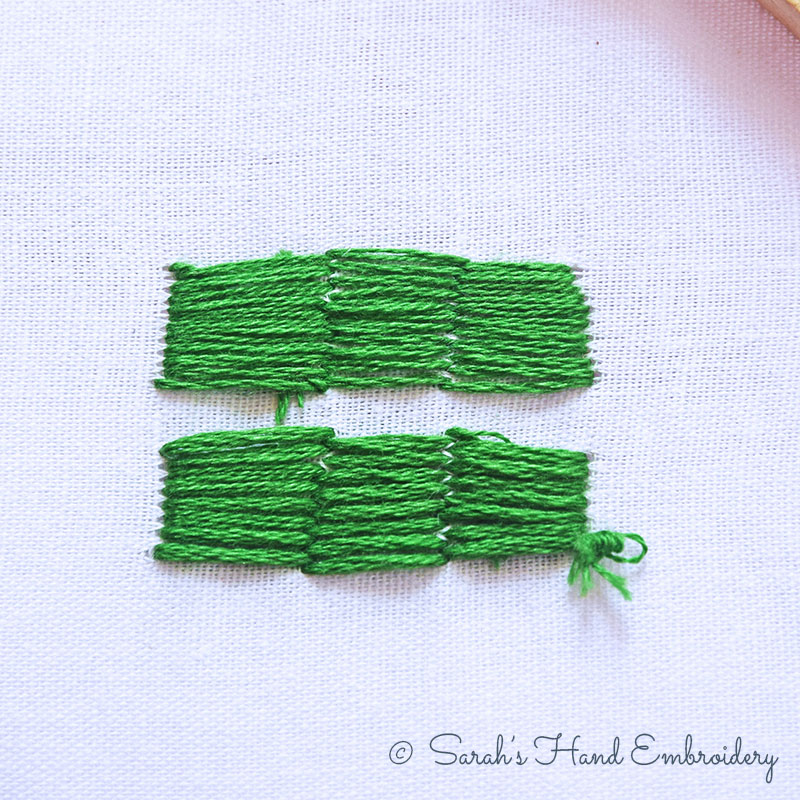
Fig 6: The reverse of the stitch would look like this. Ideally, this stitch makes sense if you start it without a knot. |
Learn this stitch along with 305 other stitches from our 600-page eBook.
 Sarah has been researching and sharing hand embroidery lessons for over 20 years, making it accessible to everyone around the globe.