Meet an Artist: Hand Embroidery in Mauritius
Stitched by Time, Sea, and Heritage
Mauritius is more than just a tropical island—it’s a story shaped by time, fire, and people. Millions of years ago, this island didn’t even exist. It was born when underwater volcanoes erupted deep in the Indian Ocean. As lava cooled and solidified, land slowly rose above the sea, creating what we now know as Mauritius.
But here’s something fascinating—Mauritius was only able to form because India left space for it. Long ago, India and Madagascar were joined together as part of the ancient supercontinent Gondwana. When India broke away and started drifting northward toward Asia, it left behind a gap in the ocean. That empty space allowed volcanoes to rise, and in that very spot, Mauritius was born.
India’s journey didn’t stop there. After millions of years, it collided with the Eurasian plate, pushing up the mighty Himalayas and creating the Indian subcontinent as we know it today.
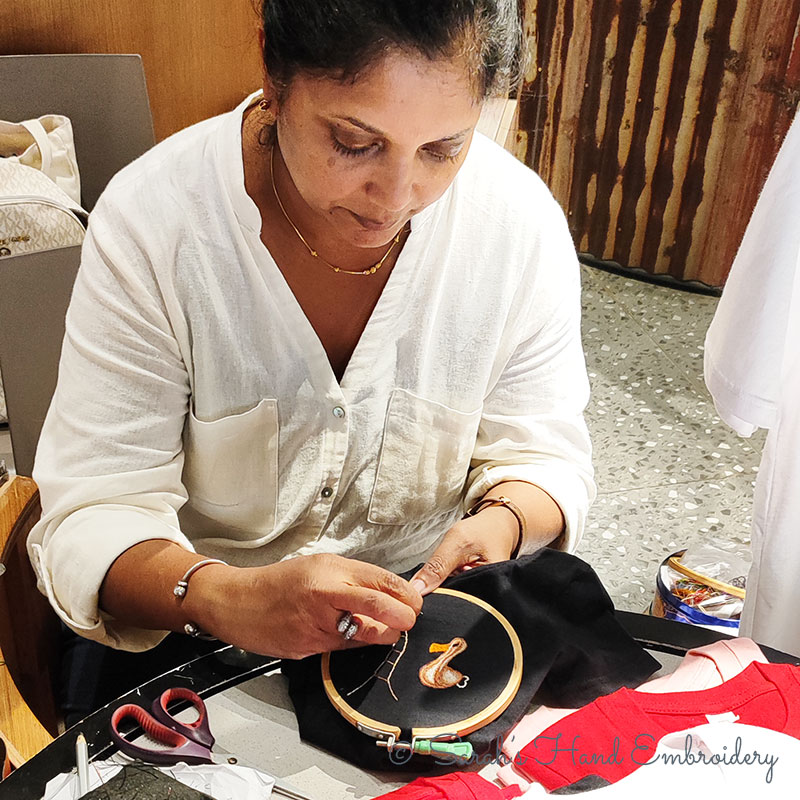
Rubie at her store, stitching a dodo onto the t-shirt
And in the small, colorful market in Port Louis, I found myself standing at the crossroads of these ancient journeys, meeting someone whose story was woven into both lands. As I wandered through myriads of souvenir shops, I saw her. Rubie Venkataswamy sat quietly at a humble embroidery stall, stitching a dodo onto a t-shirt with a fine chain stitch using a single strand of thread. Her booth was easy to miss, but her art and presence were not. I stopped, introduced myself, and we instantly connected—maybe because of our shared Indian roots.
Rubie told me that her ancestors had come from South India during the colonial era, brought to Mauritius as indentured labourers to work on the island’s sugarcane plantations after slavery was abolished. It was a hard life for many, but generations later, Rubie carries forward a different legacy: one of craft, resilience, and quiet strength.
She learned embroidery from her aunt and began by helping her at the stall for a few hours a day. Now, with her children old enough to manage on their own, it has become her full-time work. She embroiders not only t-shirts, but also beautiful pouches, table linen, and monograms using elegant satin stitch.
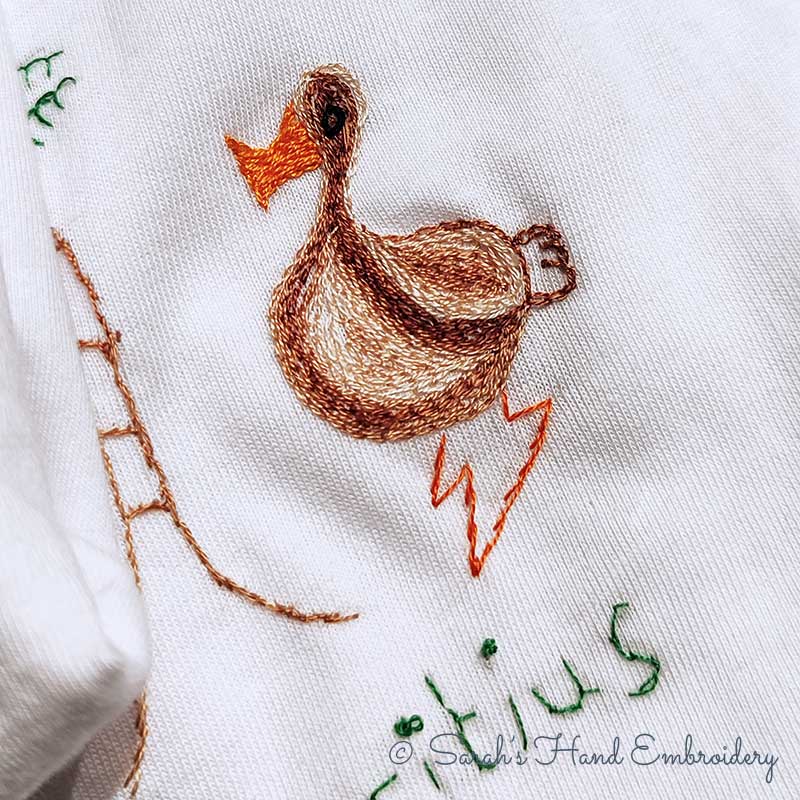
One of Rubie’s stitched souvenir dodos
As I was walking away, hoping we’d meet again someday—in India or Mauritius—I felt a hand on my shoulder. It was Rubie. She had run after me, smiling, and handed me a small embroidered pouch. A gift. She refused any payment.
That small gesture meant so much. It wasn’t just a souvenir—it was a piece of history, of her story, of a bond across oceans.
Now, if you ever go to Mauritius, chances are high that you will visit the waterfront market. And if you do, look for Rubie and her store. And when you find them, let her know that I have passed my love before buying yourself a souvenir from her.
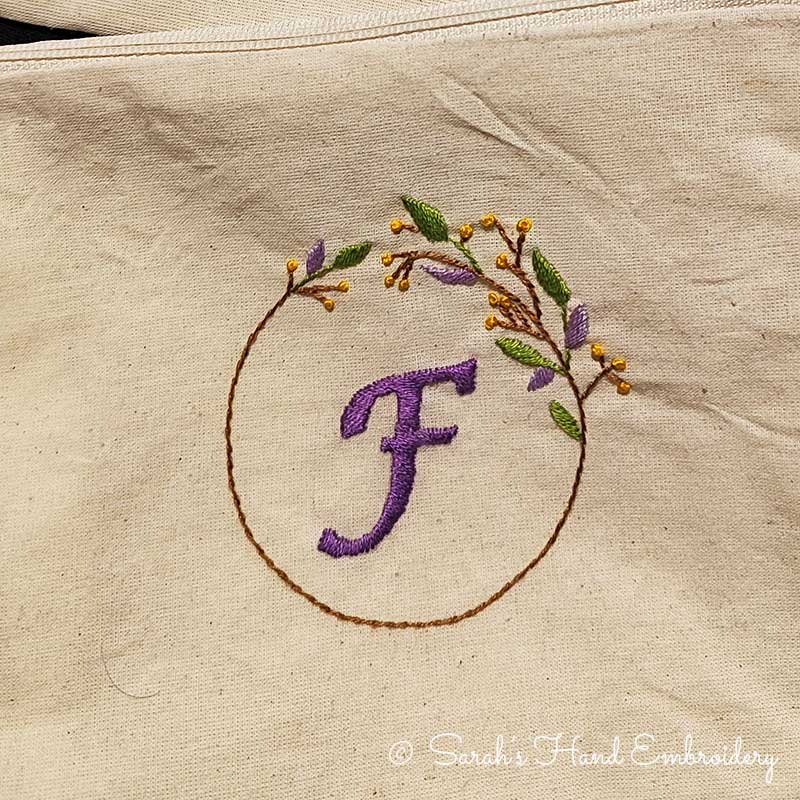
Just like Rubie, who uses simple stitches to keep her heritage alive, you too can start stitching stories that connect to your roots. It doesn’t take much—just a needle, thread, and a few basic techniques. Learn the 12 Essential Stitches on our webpage and begin your own embroidery journey.
xoxo
Sarah
 Sarah has been researching and sharing hand embroidery lessons for over 18 years, making it accessible to everyone around the globe.